
What to eat in Hội An and Saigon, from cao lầu and cơm gà to cơm tấm, bánh xèo and late-night snails, with tips on ordering and when to visit.
If you're working out what to eat in Hội An and Saigon, you're in for two very different meals. Hội An is a small old trading town in central Vietnam where a handful of local noodle dishes have barely changed in generations. Saigon, officially Ho Chi Minh City, is big, loud and open late, and it eats at every hour of the day.
Most Vietnamese food in Melbourne has southern roots, so Saigon will taste familiar in places. Hội An won't. Here are the dishes to find in each, plus how to order and the best time of year to go.
What to eat in Hội An
Cao lầu
This is the dish Hội An is proudest of. The noodles are thick, chewy and slightly yellow, because the rice is soaked in lye water made from the ash of trees from the nearby Cham Islands. Local tradition says the dough has to be made with water from the old Bá Lễ well, and that's part of why people insist you can only get true cao lầu in Hội An. It's served with very little liquid, just a few spoonfuls of rich sauce, topped with slices of pork marinated in fish sauce and five-spice, crisp fried noodle squares, herbs and greens. The dish is said to date back to the 17th century, when Chinese and Japanese merchants traded through the port, and you can taste both in it.
Mì Quảng
Unlike cao lầu, mì Quảng is found right across central Vietnam. Wide, flat rice noodles, often coloured with turmeric, sit in a small amount of intense broth with pork, prawns, a quail egg and roasted peanuts. It comes with a sesame rice cracker on the side, which you break over the top for crunch, and a big plate of herbs and shredded banana blossom. Think of it as halfway between a soup and a salad.
Cơm gà
Hội An chicken rice is simple and very good. The rice is cooked in chicken stock with turmeric, so it comes out golden and fragrant. The chicken is shredded and tossed with thinly sliced onion, Vietnamese mint and a little lime, and served with pickles, chilli sauce and a small bowl of broth. It's a perfect lunch on a hot day.
Bánh mì and white rose dumplings
The town has a reputation for its bánh mì, and it's earned. Expect a light, crackly roll, a smear of pâté, a mix of meats, pickles, herbs and a house chilli sauce. While you're in town, also try bánh bao bánh vạc, translucent rice-flour dumplings filled with prawn and pinched into a shape that looks like a little white rose, topped with fried shallots.
Saigon street food, morning to midnight
Cơm tấm
Cơm tấm means broken rice. It began as a poor farmers' meal in the Mekong Delta, made from the grains that cracked during milling, and became a Saigon staple as the city grew. There's even a saying that Saigon people eat cơm tấm the way Hanoi people eat phở. A full plate has a grilled pork chop, bì (shredded pork and pork skin with roasted rice powder), a wedge of steamed egg and pork meatloaf, spring onion oil, cucumber and pickles. The fish sauce is spooned over the plate rather than used for dipping. You can eat it for breakfast, lunch or dinner.
Bánh xèo
The southern bánh xèo is big, thin and crisp, made from rice flour, turmeric and coconut milk and folded over pork, prawns and bean sprouts. The name comes from the sizzle the batter makes when it hits the pan. You tear off a piece, wrap it in a mustard green or lettuce leaf with herbs, and dip it in nước chấm. It's messy and that's fine.
Hủ tiếu
Hủ tiếu is Saigon's other great noodle soup, with Chinese and Cambodian influences. A clear, slightly sweet pork broth goes over chewy rice noodles with sliced pork, prawns and sometimes liver or a quail egg. Order it khô (dry) and the noodles come tossed in a dark sauce with the broth on the side. Many locals swear by it for breakfast.
Bột chiên
This is an afternoon snack with Chinese-Vietnamese roots. Cubes of rice flour cake are fried in a wide flat pan until crisp, then an egg is cracked over and stirred through. It's served with shredded green papaya pickle, spring onion and a tangy soy and vinegar sauce. Look for it around schools, where students queue for it after class.
Ốc (snails and shellfish)
Ốc is how Saigon spends its evenings. Groups of friends sit around low tables with beer and order plate after plate of snails, clams and other shellfish, cooked with tamarind, butter, scallion oil, lemongrass or salted egg yolk. Vĩnh Khánh Street in District 4 is the best-known strip for it and gets going from around 7pm. Seafood here is often priced by weight, so check before you order. If you can't read the menu, point at what the next table is having.
How to eat street food well in Vietnam
Start with the stalls that are full. High turnover means the food hasn't been sitting, and it's usually the clearest sign of a good cook. Most places make one or two things, so ordering is easy: point, hold up fingers and sit where you're put. Use the plate of herbs freely, tear them into your bowl or roll them into your wraps, and season with the lime, chilli and sauces on the table. Taste first, though.
Carry cash in small notes, since many stalls don't take cards. Hot, freshly cooked food is the safest choice for a sensitive stomach, and shellfish should come out steaming. In Saigon, distances are bigger than in Hội An, so plan an area for each meal and take a Grab between them rather than trying to walk. In Hội An, go early. The old town fills with visitors by mid-morning, and the market's breakfast stalls are at their best before then.
I used to love Hoi An and wanting to live there. Many older Australian lives there now so it is a real community.
When to go
Central Vietnam has a distinct wet season in the later months of the year, and Hội An's old town is known for flooding during it. The drier months from around February to August are easier for walking and eating outdoors. Saigon is tropical and warm all year. The dry season runs roughly from December to April, while the wet season brings short, heavy afternoon downpours that usually clear quickly. Street food carries on through the rain, often under a tarp. As in Hanoi, many family stalls close for a week or so around Tết.
Taste the trip at home
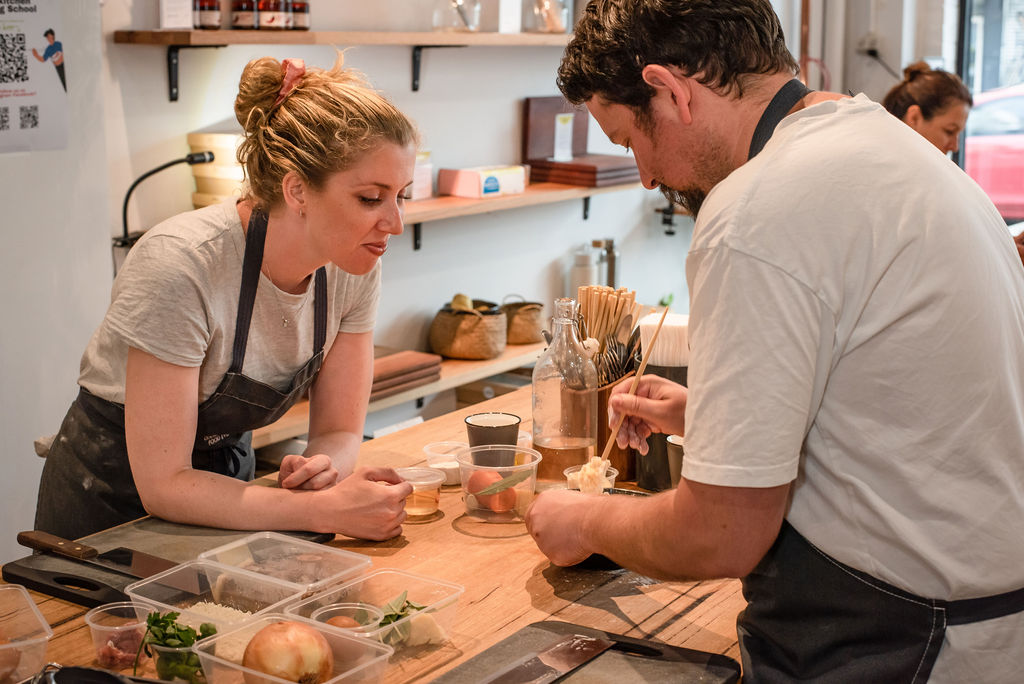
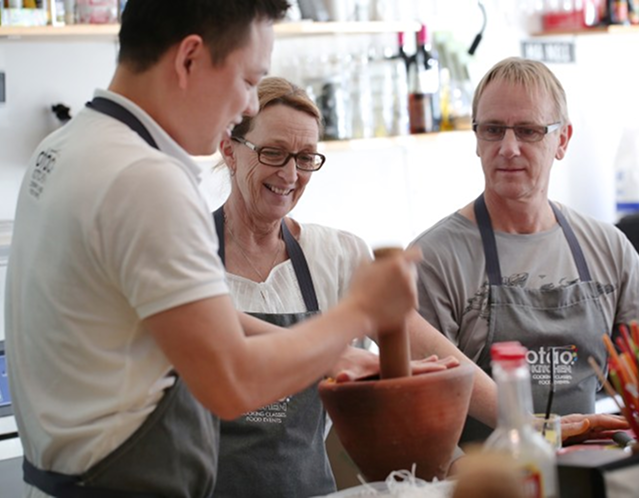
Our Vietnamese Cooking Masterclass covers the southern flavours that run through Saigon food: fish sauce, palm sugar, lime, chilli and lots of fresh herbs. It's 3 hours, hands-on, and finishes with everyone sitting down to eat together.
For a recipe to try at home, start with bánh xèo. Whisk rice flour with a pinch of turmeric, coconut milk, water and sliced spring onion into a thin batter and let it rest. Get a non-stick pan very hot, add a few prawns and slices of pork, swirl in a thin layer of batter, add bean sprouts, cover for a minute, then cook uncovered until the edges are lacy and crisp. You'll find mustard greens and herbs on Victoria Street, a short walk from our kitchen. More ideas are on our recipes page.