A Bali eating guide to real Balinese food: babi guling, bebek betutu, lawar, sate lilit and nasi campur, plus warung etiquette and the best time to visit.
Plenty of people come home from Bali having eaten mostly smoothie bowls and pizza, which is a shame, because Balinese food is some of the most distinctive cooking in Indonesia. Most Balinese are Hindu, and that shapes everything from what's cooked for a temple ceremony to the fact that pork, rare across the rest of the country, is a much-loved meat here.
This guide covers the dishes to look for, the spice paste behind them, how to eat at a warung and the best time of year to go. It's food built on fresh roots, coconut, chilli and patience.
Balinese food, offerings and base genep
In Bali, food and religion are hard to separate. Many dishes are first made as offerings for ceremonies, and certain foods are linked to certain gods. You'll see small offerings of flowers, rice and sweets placed on footpaths, shrines and shop steps every day.
Behind most of the savoury dishes is base genep, the Balinese spice paste. The name means "complete spice", and it usually includes shallots, garlic, ginger, galangal, turmeric, chilli, candlenuts, coriander seed, pepper and cumin, among others. Everything is pounded together, traditionally on a stone mortar, then fried slowly in oil until the raw smell is gone and the paste turns sweet and deep. Once you've made it, you'll understand why Balinese food tastes the way it does.
Lunch at a warung: nasi campur and babi guling
A warung is a small family-run eatery, sometimes just a counter with a few benches. Many specialise in a single dish, and the best ones are busy with locals at lunchtime. This is where you should do most of your eating.
Nasi campur
Nasi campur means "mixed rice", and it's the everyday lunch of the island. You get a mound of steamed rice with small portions of whatever the warung has made that day: perhaps shredded chicken, a vegetable curry, tofu, tempeh, a skewer of sate, fried peanuts, a boiled egg and a spoonful of sambal. Street vendors often wrap it in banana leaf to take away. At many warungs you point at what you want from the glass cabinet.
Babi guling
This is the dish most people come looking for. A whole pig is stuffed with spice paste, including chilli, turmeric, garlic and ginger, then turned on a spit over a fire until the skin is glassy and crisp. It's an important ceremony dish and a mainstay of many babi guling warungs. A plate usually comes with slices of meat, a shard of crackling, some lawar, a little spiced sausage and often a small bowl of soup. Go early, because when the pig is finished, so is lunch.
Ceremony dishes: bebek betutu, lawar and sate lilit
Bebek betutu
Betutu is duck or chicken rubbed inside and out with spice paste, wrapped tightly in banana leaves and cooked slowly in embers, traditionally for many hours. The meat comes out soft and falling off the bone, soaked in the flavour of the paste. Because it takes so long, some restaurants ask you to order it a day ahead. Today many cooks use ovens or steamers, but the slow version is worth seeking out.
Lawar
Lawar is a mix of finely chopped meat, grated coconut, long beans or young jackfruit, shrimp paste and plenty of spice. Red lawar includes fresh blood, while white lawar (lawar putih) leaves it out. It's a key ceremony dish and is made fresh and eaten quickly. The style changes from region to region, so it's worth trying more than once.
Sate lilit
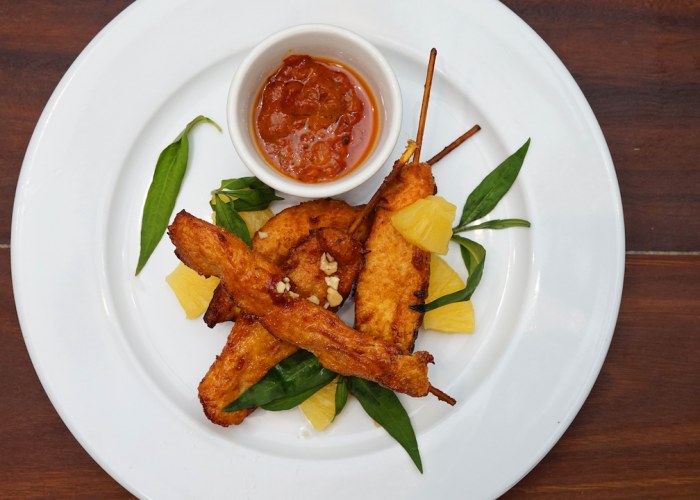
Lilit means "to wrap around". Instead of threading chunks onto a skewer, minced fish or pork is mixed with grated coconut and spice paste, then pressed around flat bamboo sticks or stalks of lemongrass and grilled over charcoal. The dish is linked to Klungkung in the east of the island and appears at Galungan, one of the biggest Balinese ceremonies.
Sambal matah and grilled fish
Two more things to try. Sambal matah is a raw sambal of finely sliced shallot, lemongrass, chilli and lime leaf dressed with lime and warm coconut oil, sharp and fresh enough to go with almost anything. And when you're near the coast, have whole fish grilled over coconut husks and brushed with spice paste, eaten with rice and sambal.

How to eat well in Bali
At a warung, look for a steady stream of locals and food that's been cooked that day. Hot, freshly grilled or fried dishes are the safest bet if your stomach is new to the island, and bottled water is the norm. In Indonesia it's polite to eat and pass things with your right hand. Many Balinese eat with their fingers, but you'll always be offered a spoon and fork.
Balinese food can be properly hot, so learn two phrases: "tidak pedas" (not spicy) and "sedikit pedas" (a little spicy). Pay attention to the offerings on the ground and step around them rather than over them. If a ceremony procession is coming down the road, pull over and wait. It's part of daily life, and it's a privilege to see.
When to go to Bali
The dry season, roughly April to October, brings sunnier days and is the busiest time for visitors. The wet season, about November to March, is hot and humid with heavy downpours, but also quieter. Two dates are worth checking before you book. Nyepi, the Balinese day of silence, shuts the whole island for 24 hours, including the airport. Galungan, one of the biggest Balinese ceremonies, fills the streets with tall decorated bamboo poles called penjor and is when you're most likely to see ceremony food like lawar and sate lilit being made.
Taste the trip at home
Our Indonesian Cooking Masterclass shows you how to build a proper spice paste and balance it with coconut, chilli and lime. It's 3 hours, hands-on, and finishes with everyone sitting down to eat together.
For a recipe idea, try sate lilit with fish. Blitz firm white fish fillets with a few spoonfuls of your spice paste, a handful of grated fresh coconut, a little palm sugar and salt. Shape the mix around trimmed lemongrass stalks, chill for half an hour so it holds, then grill over high heat until golden. Serve with rice and sambal matah. Lemongrass, galangal and fresh turmeric are easy to find on Victoria Street. For more ideas, browse our recipes page.